
Neighborhoods of Northfield - Historic Public Square
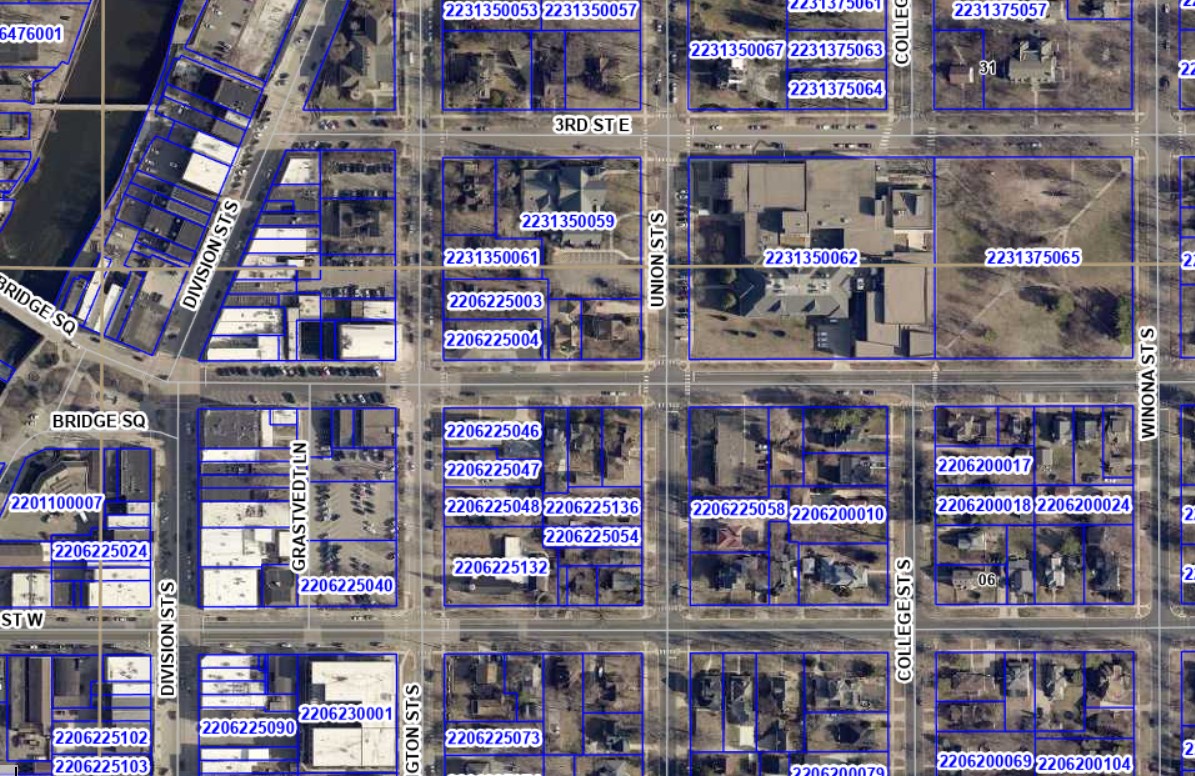
Starting at Bridge Square, John North could easily walk the two blocks from Northfield’s commercial district east to the lovely spot he called Public Square. This would be perfect as the focal point for a residential neighborhood providing a relaxing space for community activities and occasional cow grazing. Diagonal walking paths would meet in the center of the park, oft times called the “Center Circle,” and shade trees would line the perimeter to create an open gathering place. This was part of his vision for the town, predating most of the homes in the neighborhood. Public Square was finished with a circular fountain and a gazebo about 1898. The fountain was replaced in 1953 with a limestone retaining wall and has been maintained to the present. Somewhere around the turn of the century Public Square became known as Central Park.
Some of the earliest houses built in Northfield surround the park or are nearby. George Loomis, brother-in-law to John W. North, built his home in 1856 on 503 Washington St., three blocks from the Cannon River. It is one of the oldest remaining structures in town. Mark and Laura Heiman are the current owners and are in the process of renovating it. They are collecting historical information about the George Loomis family, their house, and Northfield. To view their progress, go here.
Nearby, at 419 Washington St., is the oldest church building in town—All Saints Episcopal Church (1866). This was constructed in the Prairie Gothic Revival style. It features twelve original stained glass windows and continues to serve the community with services and programs. Another early church, dedicated in 1862, is the First Congregational Church of Northfield at 300 Union St. The Congregational Church built “The Old Brown Church,” which served it well until a fire burned it to the ground in 1880. The new church was ready in December, 1881 and was built at a new larger location on the northeast corner of the same block. It joined the UCC denomination in 1957 becoming the First United Church of Christ.
One of John North’s passions was to promote education in his new town. The first school was built in 1856 three miles outside of town, a good location for the rural community but too far for town children. North built a school the following year in town. By 1861 it was overcrowded. This building found a new home at St. Olaf College and Northfield built their third school – this time next to Central Park in 1874, accommodating grades K – 12. It was named Central School. It served Northfield well as a school as originally intended and over years of change and increased student population, it has been preserved to continue its heritage as an educational institution. Go here to read about the history of Northfield schools and here to learn more about the Central School’s transformation into Carleton College’s Weitz Center for Creativity.
Back to Central Park: three houses found bordering the park are good examples of the Gothic Revival cottages found in Northfield. These stand at 311 and 317 Winona St., and 500 E. Fourth St., all built in 1870. There are other houses in the cottage style built during this time, “after the Civil War [that] have steeply-pitched dormers and round, segmental, or pointed-arch windows.” To see examples of these visit this and this.
Craftsman and Period Revival style houses were built between the larger, more ornately decorated homes of some of Northfield’s better known business and civic leaders. The O.N. Calef House at 300 E. Sixth St. (1914) is one of several examples of the craftsman style in the neighborhood. Examples of the more elaborate homes constructed during the 1880s building boom are the Nutting House and the William Pye House. John C. Nutting was the president of the First National Bank. The Nutting House stands at 217 Union St. (1887), a Queen Anne style design made of cream brick and red sandstone with beveled glass and stained glass windows. The John C. Nutting family has long ties with Carleton College, from serving as trustees, seeing their children graduate from the school, and giving the home to become the residence for Carleton’s Presidents. Another excellent example of architectural details is English Tudor Revival. The William W. Pye House at 613 E. Fourth St. (1905) is one such Revival style home, designed and built by Pye, a Northfield attorney and bank president.

Many of the original homes and first businesses that made up “Old Town” Northfield were destroyed by early fires, moved from their lots to allow for new construction which required more space, or were split into several sections and taken to other locations. As homes changed hands, owners renovated them to meet their needs rather than repair with historical preservation in mind. However, houses built at the turn-of-the-century can still be found on the streets surrounding Central Park. At Home in Northfield: A Walking and Biking Tour brochure provides a neighborhood map and information about these homes and others for you to find, identify, and enjoy on a stroll around Central Park’s Historic Public Square.